
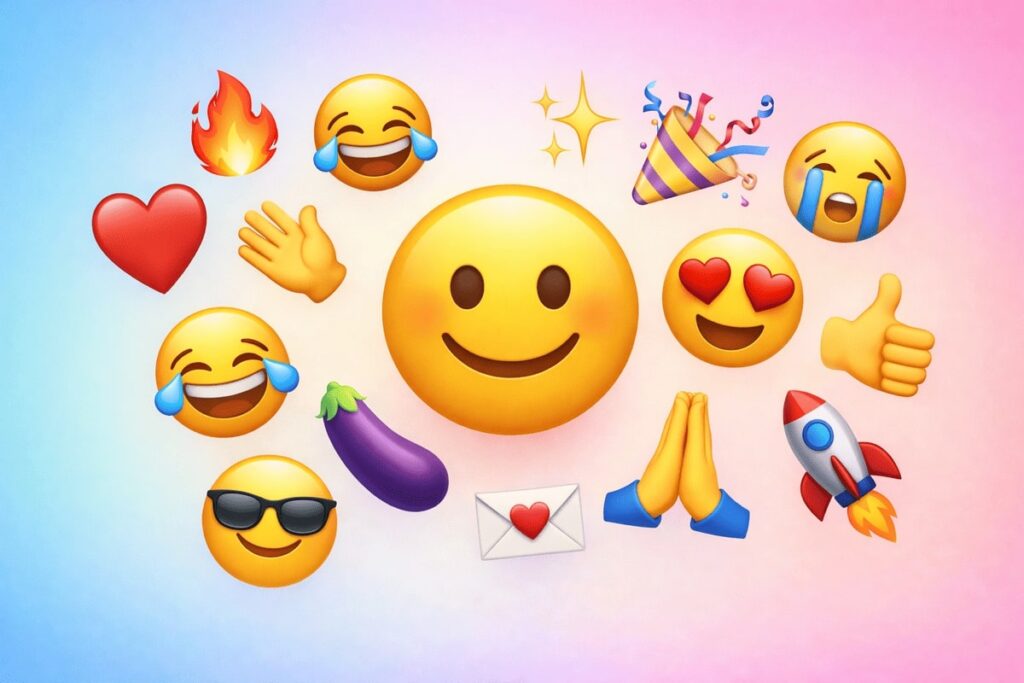
Emoji Meanings — What Emojis Mean and How People Use Them
Emoji meanings explain what emojis represent in digital communication and how people interpret them in real conversations. While every emoji has an official Unicode definition, real emoji meanings and interpretations depend on context, relationship, platform, and usage.
Many people search for individual emoji meanings to get a quick explanation. However, emojis function as a shared visual language, where meaning shifts based on emotion, intent, relationship, and pairing. This page acts as a central hub for emoji meanings, organizing the most commonly used emojis by emotion and tone and guiding you to deeper explanations of how each emoji is used in practice.
Most Used Emojis
These are the most searched emojis worldwide, used daily in texts, captions, comments, and quick reactions to express emotion and shape tone. Each emoji below links to a detailed meaning page explaining how it’s commonly used, interpreted, and combined in real conversations.
😂 Face with Tears of Joy shows intense laughter or exaggeration, while 🤣 Rolling on the Floor Laughing takes humor even further. 💀 Skull is commonly used for ironic or dark humor. ❤️ Red Heart expresses love and emotional closeness, 🤍 White Heart shows gentle support, and 💔 Broken Heart represents emotional pain. 😭 Loudly Crying Face can signal sadness or dramatic emotion, while 😍 Heart-Eyes shows admiration. Emojis like 🔥 Fire, 😎 Sunglasses, 🤔 Thinking Face, 🎉 Party Popper, and ✨ Sparkles help shape tone, hype, celebration, and emphasis in everyday conversations.
Recent Emoji Usage Trends
Emoji usage in 2025 continues to shift toward subtle tone-signaling, emotional nuance, and irony rather than literal emotion. Emojis are increasingly used to shape intent, soften messages, or signal shared cultural understanding in short digital communication.
Some emojis have taken on especially clear modern meanings. For example 🫠 Melting Face emoji is commonly used to express emotional overwhelm or social exhaustion with self-aware humor, while 🥹 Face Holding Back Tears signals gratitude or being emotionally moved rather than sadness. 💀 Skull is widely used to indicate ironic or exaggerated humor, and 😭 Loudly Crying Face often exaggerates laughter or dramatic reaction instead of literal distress. 🫶 Heart Hands emphasizes supportive, non-romantic affection, while 👀 Eyes and 📍 Round Pushpin are frequently used to signal attention, anticipation, or highlight something important in a message.
Together, these trends show how emojis function less as fixed symbols and more as flexible tone markers shaped by shared usage and evolving digital culture.
Happy & Positive Emoji Meanings
Happy emojis express joy, celebration, and upbeat emotional tone, helping messages feel friendly, lighthearted, or enthusiastic in everyday communication.
Happy and smiling face emojis are used to express joy, positivity, excitement, and friendly emotional tone in everyday conversations. 😃 Smiling Face with Big Eyes, 😄 Grinning Face with Smiling Eyes, 😁 Beaming Face with Smiling Eyes, and 😊 Smiling Face with Smiling Eyes typically signal genuine happiness, warmth, or polite friendliness. 😆 Smiling Squinting Face and 😂 Face with Tears of Joy emphasize laughter and humor, especially when something feels especially funny or lighthearted. 🤩 Star-Struck and 🥳 Partying Face express excitement, celebration, or admiration. Emojis like ✨ Sparkles, 🎉 Party Popper, and 🍾 Bottle with Popping Cork amplify positive moments, milestones, and festive moods across messages, captions, and reactions.
Love & Affection Emoji Meanings
Love emojis express affection and emotional closeness, with different hearts and faces shifting meaning by intensity, relationship, and context.
❤️ Red Heart represents deep love and strong emotional connection, while 💖 Sparkling Heart and 💕 Two Hearts add a playful or romantic tone, often used in affectionate messages. 💞 Revolving Hearts, 💓 Beating Heart, 💗 Growing Heart, and 💘 Heart with Arrow emphasize active, emotional, or developing love, making them common in relationship contexts and romantic storytelling. 😍 Smiling Face with Heart-Eyes and 🥰 Smiling Face with Hearts express admiration, warmth, and loving excitement. 🤍 White Heart conveys gentle support and sincerity, while 💔 Broken Heart represents heartbreak, loss, or emotional pain, often used in more vulnerable or emotional moments.
Sad, Vulnerable & Emotional Emojis
Sad and vulnerable emojis help convey emotional distress, sensitivity, and inner conflict when messages require more nuance than words alone.
😢 Crying Face and 😭 Loudly Crying Face represent sadness and emotional overwhelm, with 😭 often adding intensity or dramatic emphasis. 😔 Pensive Face and 😞 Disappointed Face convey quiet sadness, regret, or reflective emotions, while 😟 Worried Face and 😕 Confused Face signal uncertainty, concern, or emotional discomfort. 🥺 Pleading Face expresses vulnerability and emotional openness, often used when seeking reassurance or understanding. 💔 Broken Heart represents heartbreak and emotional pain, while 🖤 Black Heart can convey grief, heaviness, or a darker emotional tone. 😿 Crying Cat Face adds a softer, more expressive layer to sadness, often used to show empathy or emotional sensitivity.
Anger & Frustration Emojis
Angry emojis express irritation, emotional outbursts, or moments of tension — ranging from quiet frustration to full-blown rage. Often used to vent, exaggerate, or signal emotional intensity, these symbols help express what words might soften or obscure.
😠 Angry Face signals mild annoyance or disapproval, while 😡 Pouting Face (Red Angry Face) shows deeper rage or a strong reaction to something upsetting. 🤬 Face with Symbols on Mouth represents extreme anger, swearing, or explosive frustration, typically used in venting or exaggeration. 😤 Face with Steam from Nose conveys irritated determination or defiant confidence in the face of conflict. Other emojis like 👿 Angry Devil Face, 💢 Anger Symbol, 👊 Fist, and 😾 Pouting Cat Face add dramatic or stylized emphasis to feelings of anger, revenge, or emotional edge. These emojis are often used sarcastically or playfully as well, depending on tone and context.
Sarcasm, Irony & Tone-Shifting Emojis
Tone-shifting emojis help signal irony, awkwardness, skepticism, or emotional distance so messages don’t sound too harsh or too serious.
😅 Smiling Face with Sweat and 😬 Grimacing Face express awkwardness or nervous humor, often used when something feels uncomfortable but light-hearted. 🙃 Upside-Down Face and 😏 Smirking Face introduce irony, teasing, or playful sarcasm, helping messages feel less direct or more tongue-in-cheek. 😐 Neutral Face, 😑 Expressionless Face, and 😶 Face Without Mouth convey emotional flatness, detachment, or quiet restraint, often used to signal disinterest or a lack of reaction. 🤨 Face with Raised Eyebrow and 😒 Unamused Face show skepticism, doubt, or mild annoyance, while 😂 Face with Tears of Joy can be used sarcastically to exaggerate humor or downplay seriousness depending on context.
Confidence, Coolness & Attitude Emojis
Confidence emojis communicate swagger, self-assurance, independence, and intensity, commonly used in short replies and social captions.
😎 Smiling Face with Sunglasses and 😏 Smirking Face signal confidence, swagger, or playful self-belief, often used to project a relaxed or slightly teasing attitude. 💅 Nail Polish represents confidence, self-care, or a bold, unapologetic stance, while 👑 Crown is used to convey dominance, success, or self-worth. 🕶️ Sunglasses reinforce a cool or detached vibe, and 😌 Relieved Face expresses calm confidence and emotional ease. 🔥 Fire adds intensity and hype, often used to highlight something impressive or powerful, while 😤 Face with Steam from Nose shows determination, pride, or defiant confidence in the face of challenge.
Support, Gratitude & Respect Emoji Meanings
Support emojis express appreciation, empathy, encouragement, and respect, often used to comfort someone or show sincere gratitude.
🙏 Folded Hands is commonly used to say thank you, please, or to show sincere gratitude and respect. 🤍 White Heart and 💙 Blue Heart convey calm support, loyalty, and compassionate care, often used in gentle or reassuring messages. 🌸 Cherry Blossom and 💐 Bouquet represent kindness, admiration, and thoughtful appreciation, frequently shared during meaningful or supportive moments. 🥺 Pleading Face adds emotional openness and vulnerability when seeking understanding or comfort. 🤝 Handshake symbolizes agreement, solidarity, and mutual respect, while ✨ Sparkles and 🫶 Heart Hands reinforce warmth, positivity, and heartfelt support across messages, captions, and replies.
Why Can the Same Emoji Have Different Meanings?
Emoji meanings often change based on context, relationship, and platform. For example, 😂 Face with Tears of Joy can express genuine laughter in one message, but sarcasm or emotional distance in another. 🙂 Smiling Face may feel polite and warm, while 😐 Neutral Face can signal detachment or indifference. ❤️ Red Heart typically expresses affection, but combining it with 🔥 can intensify passion or excitement. These subtle shifts explain why the same emoji can feel friendly, ironic, emotional, or distant depending on how and where it’s used.
Keep in mind that platform design and generational trends also play a role. A harmless 🙂 Smiling Face might be seen as passive-aggressive by some younger users, and a 👍 Thumbs Up, which is friendly to many, might feel dismissive to Gen Z in casual chat. Emoji etiquette can vary, so always consider your audience.
Emoji Combinations and Layered Meanings
Emoji combinations create emotional shortcuts and visual storytelling by allowing people to layer tone, intent, and reaction in a single message. In everyday messaging, emoji combinations like these are used to express emotional overwhelm, vulnerability, romantic intensity, heartbreak, confidence, and supportive tone rather than literal emotion.
These emoji combinations are commonly used to express emotional overwhelm, vulnerability, intense love, heartbreak, confidence, or gentle support depending on pairing and context.
When emojis are combined, the meaning of each symbol often shifts based on order, repetition, and pairing. For example, 😂💀 is commonly used to signal ironic or exaggerated humor, while ❤️🔥 intensifies romantic or emotional emphasis. Pairings like 😭😂 often express emotional overwhelm or dramatic reaction rather than pure sadness. These combinations help clarify sarcasm, soften messages, amplify emotion, or add humor, making emoji combinations a key part of how emojis are interpreted in real conversations.
Why Emoji Meanings Change Over Time
Emoji meanings change over time because language, culture, and digital communication evolve. As emojis are reused in new contexts, their meanings often shift from literal to emotional, ironic, or symbolic. For example, 😭 Loudly Crying Face emoji is now commonly used to express laughter, while 💀 Skull emoji signals “I’m dead” humor rather than actual danger.
Meme culture, generational trends, and platform design differences all influence how emojis are interpreted. Because emojis function as a visual language, their meaning is shaped by how people use them in real conversations—allowing emoji meanings to adapt naturally over time.
Emoji Meanings FAQ
Do emojis have fixed meanings?
No. While each emoji has an official Unicode definition, real emoji meanings depend on context, relationship, platform, and how people use them in conversation. The same emoji can express different emotions depending on tone and pairing.
Why does the same emoji feel different in different messages?
Emoji meaning changes based on surrounding text, who you’re talking to, and which emojis appear together. For example, 😂 can signal genuine laughter, sarcasm, or emotional distance depending on how it’s used.
How does Gen Z use emojis differently?
Gen Z often uses emojis more ironically or symbolically rather than literally. Emojis like 😂 may signal sarcasm instead of laughter, while 💀 is commonly used to express something being extremely funny or overwhelming. Meaning is heavily influenced by context, repetition, and platform culture rather than official definitions.
Why do people combine emojis?
Emoji combinations add nuance, humor, and emotional layering. Combining emojis allows people to tell a short visual story or adjust tone more precisely than using a single emoji alone.
Is it okay to use emojis in professional communication?
Yes, when used intentionally. Emojis can soften tone, show appreciation, or clarify emotion in informal professional settings, but overuse or ambiguous emojis may cause confusion in formal contexts.
Explore Emoji Meanings Further
Emojis aren’t fixed symbols — they work like a shared visual language that evolves with culture, platform trends, and human emotion. Understanding emoji meanings as groups rather than isolated icons helps you communicate tone more clearly, avoid misinterpretation, and express emotion faster in digital conversations. If you want deeper explanations, explore individual emoji meaning pages, emotional emoji clusters, or seasonal emoji collections.